
Best Radios for Construction Sites in the UK
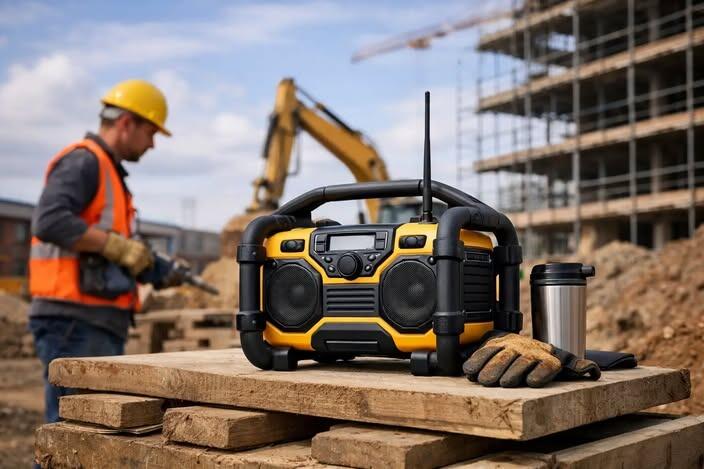
A missed instruction beside a reversing lorry, a supervisor unable to reach a crane team, or a delivery arriving at the wrong gate can quickly cost time and create avoidable risk. The best radios for construction sites are not simply the loudest handhelds or the lowest-priced pairs. They are a properly chosen communication system that suits the site layout, workforce, working environment and expected duration of the project.
For a small, open site, a straightforward licence-free radio may be enough. A multi-storey build, infrastructure project or busy redevelopment usually needs licensed equipment, better audio accessories and a planned approach to coverage. Choosing the right type at the outset makes day-to-day communication clearer and avoids replacing unsuitable equipment halfway through a job.
What makes a construction site radio suitable?
Construction is a difficult environment for radio communication. Steelwork, reinforced concrete, machinery, temporary structures and changing floor plans all affect signal paths. A radio that appears to work well during a short test at ground level may struggle once teams are separated by several floors or working in basements.
Audio is equally important. Plant noise, wind and hearing protection can make a standard speaker difficult to hear. Look for radios with a strong front-facing speaker, a clear microphone and practical accessory options. Remote speaker microphones, acoustic-tube earpieces and hearing-protection-compatible headsets can make a substantial difference where staff need to hear instructions without handling the radio.
The physical build matters too. A construction radio should be rated for resistance to dust and water, with a battery and controls that can be used in gloves. An IP rating provides a useful indication of enclosure protection, but it should be considered alongside the actual work environment. A radio used occasionally by a site manager has different demands from one carried all day by groundworks, security or lifting teams.
Best radios for construction sites: choose the right system
There is no single best option for every project. The right system depends on how far users need to communicate, what is between them, how many people need access and whether the radios must integrate with an existing fleet.
Licence-free PMR446 radios for smaller sites
Licence-free PMR446 handheld radios are often a sensible starting point for small teams working across a compact, mostly open area. They are quick to deploy, require no individual Ofcom business radio licence and can be useful for short-term works, trades coordination, events around a site or supplementary communications.
Their limitation is power and therefore usable range in challenging conditions. Published range figures are generally based on clear, open ground and should not be treated as a site guarantee. Concrete, steel and below-ground work can reduce performance significantly. PMR446 channels are also shared, so other nearby users may be heard, particularly in built-up areas.
These radios are best where simplicity is the priority and communications are non-critical. They are less suitable for large projects where teams must communicate reliably between buildings, floors or separate work zones.
Licensed business two-way radios for dependable local coverage
For most active construction sites, licensed business radios are the practical choice. A UK business radio licence allows the use of assigned frequencies and equipment configured for the organisation or site, reducing the chance of interference from unrelated users. It also gives more scope to plan channels for distinct groups, such as management, logistics, security and lifting operations.
Licensed analogue radios remain a sound option when the requirement is clear voice communication, uncomplicated operation and controlled cost. They are familiar to many users, easy to programme and well suited to teams that need a straightforward push-to-talk service.
A licence does not automatically solve every coverage problem. The frequency, antenna, site geography and radio configuration still need to be appropriate. However, it provides a far stronger foundation than relying on shared licence-free channels for an operational site.
Digital two-way radios for busy teams and added functions
Digital two-way radio systems can provide clearer audio at the edge of coverage, better channel management and functions such as individual calling, group calling, text messaging and emergency alerting. They are particularly useful where several teams share the same site but should not all hear every conversation.
Digital is not always the automatic upgrade. The equipment cost, programming requirements and system design can be higher, and some features only work when every radio in the group is compatible and correctly configured. For a modest site with one working group, a well-specified analogue licensed radio can still be the better-value tool.
Where work is phased, teams are larger or accountability matters, digital radios offer useful control. A supervisor can call a specific user or group without tying up the whole channel, while emergency functions can be assigned and tested as part of the site communication procedure.
Network radios for wide-area and multi-site work
Network radios, also called push-to-talk over cellular radios, use mobile data or Wi-Fi rather than conventional local radio frequencies. They can be effective for contractors managing several locations, fleet movements, remote supervisors or workers who travel between sites. Subject to network availability, they can communicate across towns or nationally rather than only within the radio coverage area.
They are not a substitute for a local radio system in every case. Mobile coverage can be poor in basements, inside certain structures and in remote areas. They also rely on a SIM, data service and ongoing subscription arrangement. For many organisations, the best answer is a combination: local licensed radios for the workface and network radios for managers, vehicles and wider operations.
Assess coverage before buying on headline range
The most useful question is not, “How many miles does this radio cover?” It is, “Can a user at the furthest working point speak clearly to the person who needs to hear them?” On construction sites, that point changes as work progresses.
Consider the site perimeter, hoarding, basement areas, stairwells, welfare units, tower cranes, plant routes and any separate compounds. A single radio channel may cover an open groundwork phase but fail once steel and concrete frames are in place. If the project is long-running or structurally complex, a coverage assessment and staged system plan are worthwhile.
Some larger sites may need a repeater system to extend coverage. A repeater receives a transmission and retransmits it from a better position, helping users communicate across areas that handheld-to-handheld radios cannot reliably bridge. This needs correct licensing, installation and testing. It is not simply an extra box to add after problems arise.
Features that earn their place on site
Battery capacity is a working requirement, not a specification to skim past. A radio should last a full shift under realistic use, with spare batteries, multi-unit chargers or vehicle charging considered where shifts are long. Lithium-ion batteries are common, but charging routines and replacement availability should form part of the decision.
Emergency buttons can be valuable, but only when they are programmed for a defined response. A button that sends an alarm to nobody, or alerts every user without identifying a procedure, can create confusion. Establish who receives the alert, how they acknowledge it and what action follows.
Lone-worker functions, man-down alerts and GPS may also be appropriate for security staff, remote workers or high-risk tasks. These functions require careful setup and testing. They should support, not replace, a proper site safety process.
For day-to-day usability, prioritise loud and intelligible audio, simple channel selection, a display that remains readable outdoors where needed, and accessories suited to the job. A radio clipped under a jacket with a remote speaker microphone may be safer and easier to use than one repeatedly removed from a belt.
Licensing, programming and site discipline
Business radio licensing in the UK is administered by Ofcom. The appropriate licence depends on how and where the radios will be used, so it is sensible to confirm the intended operating area and system type before ordering equipment. Radios should be supplied and programmed for legal use, rather than set to unverified frequencies.
Clear operating discipline is just as important as the equipment. Give channels meaningful names, allocate them to defined functions and agree short call procedures. Keep urgent traffic separate where possible. Workers should know how to make a priority call, report a fault and charge or return equipment at the end of a shift.
A radio system also needs ownership. Someone should maintain a record of issued radios, batteries, chargers and accessories, check units for damage and arrange repairs promptly. A cracked aerial, damaged accessory lead or weak battery can undermine an otherwise capable system.
Buy for the project, not just the first week
Construction radio requirements change as a site develops. Choose equipment from a range that can expand with additional handsets, compatible accessories, replacement batteries and, where needed, repeaters or vehicle installations. This avoids ending up with several incompatible sets bought at different stages of the work.
Specialist advice is particularly valuable where coverage is uncertain, teams work across several locations or the radios support safety-critical coordination. Radioworld UK can help organisations select compatible equipment and support the programming, installation, maintenance and repair work that keeps a system usable beyond the initial purchase.
The right radio should become an ordinary part of a well-run site: charged, assigned, clearly heard and ready when a quick call prevents a delay or helps keep people out of harm's way.
Go Back