
Best Two Way Radios for Business Use
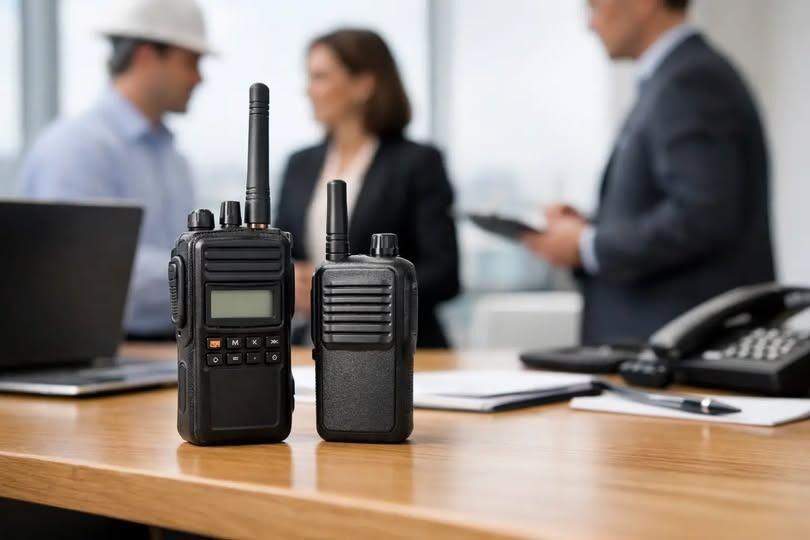
A radio that fails on a noisy site, across a steel-framed warehouse, or halfway through a security shift is not a minor inconvenience. It slows work down, creates risk and usually ends up costing more than buying the right equipment in the first place. Choosing the best two way radios for business use starts with a simple point - business radios should be matched to the job, not picked on price alone.
For some organisations, a compact licence-free handset is perfectly adequate. For others, especially those working across larger sites, multiple floors, vehicle fleets or demanding outdoor conditions, a licensed UHF or VHF system will be the better fit. The right answer depends on your environment, your coverage requirements and how much reliability matters when conditions are less than ideal.
What makes the best two way radios for business use?
The best business radios are not necessarily the most expensive or the most feature-heavy. They are the sets that provide clear audio, dependable coverage, sensible battery life and a build quality suited to daily use. In practical terms, that means looking beyond headline range claims and focusing on where and how the radios will actually be used.
Audio quality matters more than many buyers expect. A radio used in hospitality, education or retail may only need modest output, but in construction, logistics or event security, strong and intelligible audio is essential. If users cannot hear calls over machinery, traffic or crowd noise, the system is already compromised.
Battery performance is equally important. A radio that lasts a full working shift with margin to spare is far more useful than one that needs careful battery management by mid-afternoon. Multi-shift operations should also think about charging routines, spare battery availability and whether rapid chargers are needed.
Durability is another dividing line. A front-of-house team may be well served by lighter handsets with discreet earpieces, whereas facilities, site managers and outdoor teams usually need something more rugged, with better ingress protection and stronger accessory connections.
Licence-free or licensed radios?
This is usually the first decision, and it affects both performance and long-term value.
Licence-free radios
Licence-free radios, commonly PMR446 models, are straightforward to deploy and avoid ongoing Ofcom licensing costs. They suit smaller premises, shorter working distances and businesses that need a simple, low-barrier solution. Independent retailers, cafés, schools, churches and small event teams often find them entirely adequate.
The trade-off is power and flexibility. Licence-free sets are restricted, so coverage can drop off quickly in reinforced buildings, industrial units or built-up areas. They are also more likely to suffer congestion if many nearby users are on the same channels.
Licensed radios
Licensed business radios offer more power, more channel options and generally stronger performance across difficult sites. They are a better fit for warehouses, farms, factories, private security, transport yards, larger venues and any operation where radio traffic is a core part of day-to-day work.
They do require an Ofcom licence and proper programming, but this is often where a specialist supplier adds the most value. A licensed system, set up correctly from the outset, usually gives better coverage, cleaner channel management and more room to expand later.
Choosing by working environment
There is no single model that suits every business. The environment should drive the decision.
Retail, hospitality and front-of-house
In customer-facing settings, size and ease of use are often more important than heavy-duty construction. Staff need clear communications, straightforward controls and enough battery life to cover a shift. Discreet accessories are often part of the package, especially where radios are worn on the shop floor or in guest areas.
For these users, compact licence-free handsets can be a sensible choice if the site is not too large or structurally difficult. If the building includes service corridors, basements and multiple floors, stepping up to a licensed system may avoid weak spots.
Warehousing, logistics and industrial sites
Industrial users usually need stronger audio, tougher housings and better range through steel, concrete and racking. This is where licensed UHF radios are commonly preferred. UHF generally performs well inside buildings and around dense structures, although actual results will always depend on site layout.
Features such as lone worker support, emergency buttons and voice announcements can also be worth considering if staff are spread across a large area or work in shifts. In these settings, radios are tools rather than conveniences, so resilience matters.
Construction, agriculture and outdoor operations
Outdoor teams often need weather resistance, glove-friendly controls and dependable performance over larger open areas. VHF can be advantageous in some open environments, particularly where there are fewer obstacles, though UHF may still be the better option if users move between buildings and outdoor spaces.
Dust, moisture and knocks are routine on working sites, so ingress ratings and general build quality should not be treated as optional extras. Cheaper sets may work initially, but they rarely stand up well to sustained use in harsher conditions.
Security and events
Security teams rely heavily on immediate, clear communication. Delays, missed calls or weak audio can quickly become operational problems. Licensed radios are often the right choice here, especially for larger venues, night-time work or multi-team coordination.
Accessories also matter more in this sector. Covert earpieces, speaker microphones and well-secured carry options can improve usability considerably. A good radio system for security is not just about the handset - it is the complete setup.
Features worth paying for, and features you may not need
It is easy to overbuy if a specification sheet is doing the selling. In business use, some features are genuinely valuable, while others are only useful in specific workflows.
A strong case can be made for radios with clear displays, good accessory support, durable belt clips and straightforward channel selection. Where compliance or user accountability matters, programmable channels and restricted user access can be useful. Businesses with dispersed teams may benefit from lone worker and man-down functions, though these should be chosen because they support a real safety process, not because they sound impressive.
By contrast, not every business needs advanced digital functions, text messaging or complex menu systems. If staff turnover is high or temporary workers use the radios, simplicity often wins. A handset that new staff can use correctly within minutes will usually outperform a technically richer model that causes confusion.
Analogue, digital and network radios
Most business buyers are choosing between conventional analogue and digital two-way radios, with network radios becoming relevant in some cases.
Analogue remains viable for simpler systems and tighter budgets. It is familiar, effective and still appropriate for many smaller teams. Digital radio offers advantages in audio clarity, battery efficiency and channel capacity, and can be the better long-term investment for businesses that depend heavily on radio communications.
Network radios are worth considering where users are spread over very wide areas and mobile network coverage is reliable. They can link teams beyond the practical limits of conventional radio coverage, but they are dependent on network availability and are not the right answer for every site. For many operational users, a properly specified licensed radio system remains the more dependable option.
Why support matters as much as the hardware
The best two way radios for business use are only part of the picture. Programming, licensing, compatibility, accessories, charging arrangements and future maintenance all affect whether the system works properly over time. Businesses often run into trouble not because the radios are poor, but because the setup was never right.
That is why specialist advice matters. A radio supplier with genuine sector knowledge can help identify whether you need PMR446 or licensed equipment, UHF or VHF, analogue or digital, and which accessories will actually improve day-to-day use. Support after purchase matters as well. Radios are working equipment, and at some point batteries fade, aerials get damaged, chargers fail or fleets need expanding.
For many organisations, buying from a specialist such as Radioworld UK means access to product knowledge, setup guidance and ongoing support rather than a box dropped at the door. That tends to be more valuable than a marginal saving on headline price.
How to narrow down the right choice
Start with the site. Consider building materials, indoor and outdoor use, noise levels and the distances your staff need to cover. Then look at how many users need radios, whether they all need to hear the same traffic, and how long the equipment must run between charges.
Next, think about who will be using the handsets. A caretaker team, warehouse crew and front-of-house staff may all need different form factors or accessories even if they are on the same site. Finally, decide whether your requirement is basic communication or a more structured operational system with licensing, programming and scope to expand.
The right radio is rarely the one with the longest claimed range or the lowest advertised cost. It is the one that suits your environment, your users and the standard of reliability your business expects.
If you are weighing up options, the most useful next step is usually not comparing generic specifications online. It is getting advice based on your actual site, because good radio performance is always specific to the job at hand.
Go Back