
Digital Mobile Radio Guide for UK Radio Users
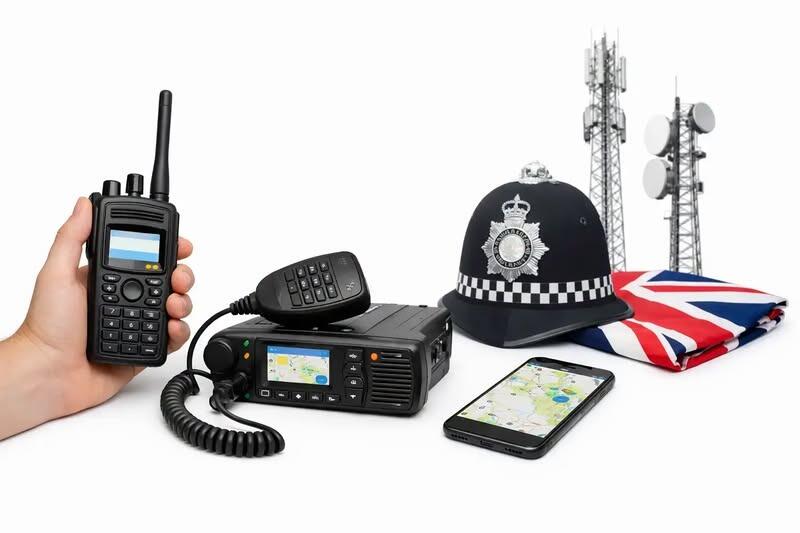
A radio that powers up and shows signal bars is not necessarily ready to communicate. In digital systems, the channel plan, frequency allocation, colour code, time slot and talkgroup must all be correct. This digital mobile radio guide explains what Digital Mobile Radio, usually shortened to DMR, does well, where it needs careful planning, and how to specify a system that will work when it is needed.
What digital mobile radio means
Digital Mobile Radio is a professional two-way radio standard designed for efficient voice and data communication. It is widely used by businesses, security teams, events, utilities, transport operators and radio amateurs. Most conventional DMR equipment uses narrowband channels and divides each channel into two time slots. In practical terms, two separate conversations can share one 12.5 kHz channel, provided the system is configured correctly.
That efficiency is a major reason for choosing DMR. It can give clearer audio at the edge of usable coverage than analogue FM, supports individual and group calling, and allows features such as text messaging, GPS position reporting, lone-worker functions and emergency alerts on suitable equipment and systems.
However, digital audio does not gradually become noisier in the same way as analogue. Analogue users can often understand a weak, noisy signal. With DMR, audio can remain clear and then break up or stop once the signal falls below the usable threshold. Good coverage design, antenna selection and radio placement therefore still matter as much as the specification of the handset.
Digital mobile radio guide: the terms that matter
DMR terminology can look more complicated than it is, but a few settings determine whether radios can talk to each other.
A frequency is the radio channel used for transmit and receive. On a simplex channel, every radio transmits and receives on the same frequency. A repeater uses separate input and output frequencies, receiving a signal on one and retransmitting it on another to extend coverage.
A colour code is a digital access setting, comparable in purpose to an analogue CTCSS or DCS tone. Radios must normally use the same colour code to access the same DMR repeater or local system.
A time slot is one of the two communication paths available within a conventional DMR channel. A repeater may assign different talkgroups or services to each slot. Selecting the wrong slot can leave a radio apparently programmed but unable to reach the intended group.
A talkgroup identifies the group of users being called. It might be used for a depot, security team, vehicle fleet, event control room or amateur radio network. Talkgroups make it possible to keep operational traffic organised without giving every team a separate radio channel.
A radio ID is the individual digital identity assigned to a radio. This helps systems identify calling units and can support individual calling and location services. IDs should be managed properly, particularly on larger fleets, to avoid duplicated identities and confusing call records.
Choosing between analogue, DMR and network radio
The right technology depends on the area to be covered and the nature of the work. Analogue two-way radio remains a sensible choice for straightforward local communication, particularly where an existing analogue system is already in place. It is familiar, often simple to programme, and weak signals can still be usable.
DMR is usually the stronger option where teams need cleaner group communication, better channel efficiency or operational features. A warehouse, factory, school site, event venue, vehicle fleet or multi-team operation may benefit from the way DMR separates users through talkgroups and provides status or emergency functions.
Network radios are different again. Rather than using a local UHF or VHF radio channel, they use mobile data or Wi-Fi. They can provide wide-area communication wherever there is suitable network coverage, but they rely on that service and on an ongoing data arrangement. For a local site where independent radio communication is required, licensed DMR may be more appropriate. For teams travelling across the UK, network radio can be a practical alternative or complement.
There is no universal winner. A site with thick concrete, steelwork, basements or wide outdoor areas needs a coverage assessment, not an assumption based on a product datasheet.
Licensing and lawful operation in the UK
For business and organisational use, radio frequencies must be properly authorised. Ofcom licensing arrangements cover different operational requirements, from defined sites to wider areas of use. The licence, assigned frequencies and technical conditions should be established before radios are programmed for service.
Do not treat a pre-programmed radio as a licence to transmit. A radio may be physically capable of operating across a broad frequency range, but lawful use is limited by the licence, the assigned channels and the equipment approval requirements that apply to the installation.
Amateur radio is separate. Licensed radio amateurs can use amateur allocations in line with their licence conditions and commonly use DMR through amateur repeaters or hotspots. That does not make amateur frequencies suitable for commercial, security or business traffic. Equally, business radio channels must not be used for amateur activity.
Encryption requires particular care. It can be appropriate on authorised professional systems where privacy is required, but it affects interoperability and must be used in accordance with the relevant licensing, system and legal requirements. A feature being present in a radio menu does not mean it should automatically be enabled.
Start with the operating requirement
The most reliable DMR installations begin with a clear picture of how people work. Count the users, but also consider how many conversations may be needed at the same time. A ten-person team that all shares one talkgroup has a different requirement from ten users split between dispatch, maintenance and security.
Consider the environment. Indoor retail and hospitality use may favour compact hand-portables, discreet earpieces and charging arrangements that keep spare batteries ready. Construction, logistics and outdoor work may call for tougher radios, higher-capacity batteries, speaker microphones and vehicle chargers. Marine, ATEX and intrinsically safe applications require equipment selected specifically for those environments rather than a general-purpose handheld.
Coverage should be tested where radios will actually be used: loading bays, stairwells, plant rooms, vehicle cabs, upper floors and site boundaries. If direct radio-to-radio communication is insufficient, a repeater, external antenna, distributed antenna arrangement or a different technology may be required. Adding higher-power handhelds is rarely a substitute for proper system design.
Programming is part of the system
DMR radios need programming before they become useful operational tools. The codeplug - the configuration stored in the radio - contains channels, contacts, talkgroups, radio IDs, scan lists, button functions and safety settings. A poorly built codeplug can make a capable radio awkward or unreliable to use.
Keep channel names short and unmistakable. Staff should see labels such as “Operations”, “Security” or “Vehicle 1”, not a cryptic list of frequencies. Where a radio has an emergency button, decide who receives the alert, what happens after it is pressed and whether the coverage area supports the feature. Lone-worker and man-down functions also need a response procedure behind them; an alert without a monitored destination is not a safety system.
Fleet consistency matters. Radios used by the same team should have the same channel order, button behaviour and accessories where practical. Maintain a record of radio serial numbers, IDs, battery issue dates and programming versions. This makes replacement, fault-finding and expansion much easier.
Compatibility is not guaranteed by the DMR label
DMR is a standard, but practical compatibility is still affected by frequency band, programmed settings, features and system design. A UHF radio cannot communicate directly with a VHF radio. Two radios on the same band still need matching frequencies, colour code, time slot and talkgroup. Some advanced functions, dispatch applications, roaming arrangements and encrypted systems may also be manufacturer- or system-specific.
For this reason, it is worth checking existing radio details before adding units to a fleet. The make and model are useful, but the current channel information, licence details and intended operating area are more valuable. If a replacement radio is required quickly, cloning an existing configuration should be done carefully and with a unique radio ID where needed.
Accessories deserve the same attention. A poor earpiece can make clear digital audio difficult to hear; an unsuitable speaker microphone can be unreliable in rain or dust; and non-approved chargers or batteries can create avoidable safety and performance problems. Choose accessories for the job, not just the connector.
Keeping a DMR system working
Digital radio fleets benefit from planned maintenance. Batteries lose capacity over time, antenna connections loosen, accessories suffer daily wear and channel requirements change as an operation grows. Periodic audio checks, coverage tests and software reviews are far less disruptive than discovering faults during a busy shift or incident.
When a radio develops intermittent audio, reduced range or charging problems, diagnose the whole chain: battery, antenna, accessory, programming, repeater access and user technique. Replacing the radio first can be expensive and may not address the fault.
Radioworld UK can assist with equipment selection, programming, installation and repair support where a complete radio solution is required. The useful starting point is not simply “which DMR radio is best?”, but “where will it be used, who needs to speak to whom, and what must happen if communication fails?” Those answers lead to a system that is easier to operate and dependable long after the initial purchase.
Go Back