
How to Choose the Right Ham Radio Transceiver – The Exciting, No‑Nonsense Beginner’s Guide
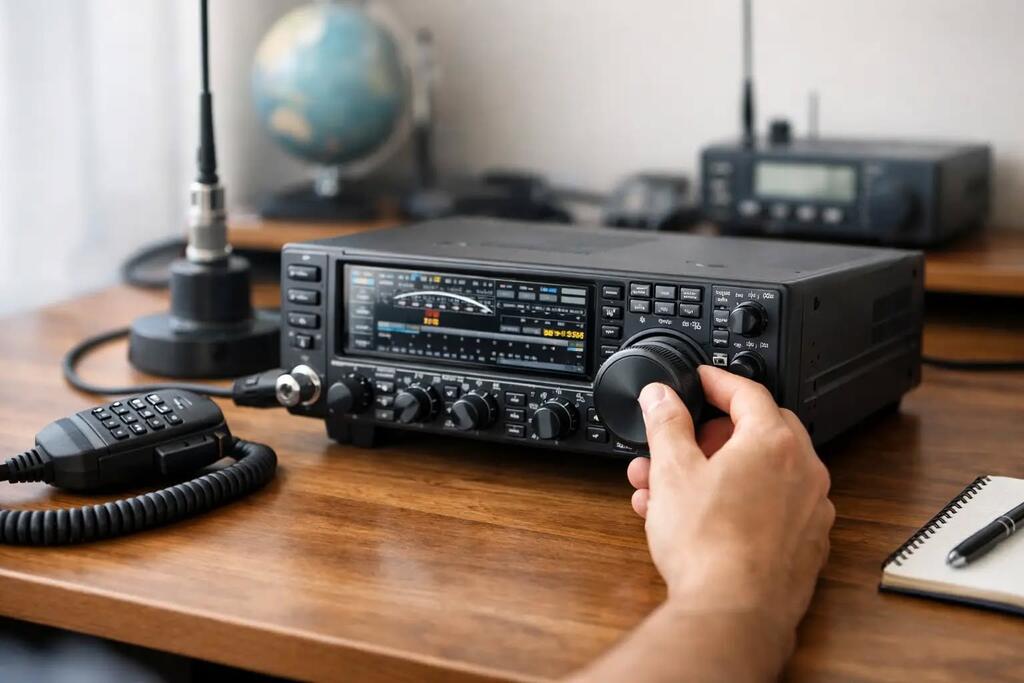
A transceiver that looks right on paper can still be the wrong radio once it is on your desk, in your vehicle or out in the field. When people ask how to choose a ham radio transceiver, the best starting point is not the badge on the front panel. It is how, where and why you expect to use it.
Start with the job the radio needs to do
Ham radio covers very different styles of operating. A compact VHF/UHF set for local repeaters and club nets is a very different purchase from an HF transceiver intended for long-distance contacts, digital modes or portable operating. If you buy by features alone, it is easy to pay for capability you will not use, or miss something essential for your station.
For many UK amateurs, the first decision is whether the radio is mainly for local communication or wider coverage. If your operating will centre on nearby repeaters, simplex contacts, events and mobile use, a 2m or dual-band VHF/UHF transceiver may be the right fit. If your aim is HF working across the UK, Europe and further afield, then band coverage, receiver performance and antenna matching become much more important.
There is also a practical middle ground. Some operators want one radio that can cover several bands and operating styles. That can work well, but combined capability usually brings higher cost and more menu complexity. A simpler radio often gets used more, especially if you are still building experience.
How to choose a ham radio transceiver by operating style
The right specification depends heavily on whether the set will be used as a base station, mobile installation or portable field radio. This affects far more than size.
A base station transceiver gives you room for a larger chassis, a better speaker, easier controls and a proper power supply arrangement. It often makes sense if the radio will live in a shack and be paired with an external antenna. You may also place more value on filtering options, a clearer display and straightforward integration with a tuner, amplifier or computer.
A mobile transceiver has different priorities. It needs to fit safely in the vehicle, handle power from the vehicle electrical system and remain readable and usable while travelling. A detachable front panel can be more useful than an extra feature buried in the menu. Heat management also matters, especially with higher duty-cycle modes.
Portable operation introduces another set of trade-offs. Weight, battery efficiency and current draw become central. A field radio may offer lower output power than a full-sized base unit, but that is often a sensible compromise if you are carrying it to a summit or using it away from mains power.
Choose the bands before the brand
One of the most common mistakes is comparing radios without first narrowing down the band coverage you actually need. The question is not which transceiver is best in general. It is which bands support the operating you want to do.
If you are newly licensed and focused on local activity, 2m and 70cm usually make the most immediate sense. There is strong practical value in a well-built VHF/UHF set with reliable memory management, good audio and sensible programming.
If you are moving into HF, consider which amateur bands you expect to use regularly. Some operators spend most of their time on 40m and 20m, while others want wider all-band coverage including 6m. If you are interested in contesting, SSB and CW performance will matter. If you plan to work FT8 or other computer-based modes, audio interfacing and CAT control may matter more than a long feature list on the front panel.
Band choice also affects the rest of the station. A radio is only one part of the system. Antenna options, available space, feedline quality and grounding arrangements all influence how well the setup will perform.
Think carefully about output power
More power can help, but it is not a cure for a poor antenna or a compromised installation. A 100W HF transceiver is a common starting point for fixed-station use because it offers flexibility across voice, digital and CW operation. For mobile or portable use, lower power may be entirely appropriate.
On VHF and UHF, a mobile transceiver with 25W to 50W can be a major step up from a handheld, particularly when used with a properly installed external antenna. That does not mean maximum power is always needed. In many cases, clean audio, a good aerial and low-loss coax will deliver more practical benefit.
Power requirements also affect your supporting equipment. Higher output means more demand on your power supply, cabling and cooling. If you expect long operating periods on digital modes, check duty-cycle suitability rather than assuming all power ratings tell the full story.
Receiver performance matters more than many buyers expect
When people compare specifications, transmit power and band coverage get attention first. In actual use, receiver quality often makes the bigger difference. A radio with good selectivity, sensible filtering and strong signal handling will be more enjoyable and less tiring to operate.
This becomes especially important on crowded HF bands or in locations with significant RF noise. If you operate near other transmitters, urban electronics or a busy contest environment, a stronger receiver front end can be worth paying for. A cleaner, more stable receive section can make weak stations easier to copy and reduce frustration when conditions are poor.
The same applies to audio quality. A clear receiver with intelligible speaker audio is not a luxury. It helps over long operating sessions, particularly if the set will be used in a vehicle or workshop where background noise is unavoidable.
Features that are useful, and features that are just there
Modern transceivers can include DSP, spectrum displays, waterfalls, internal sound cards, built-in tuners, GPS, APRS capability, DMR, C4FM, D-STAR and more. Some of these will be essential for the right user. Some will never be touched.
A built-in tuner, for example, is convenient, but it is not a substitute for a well-matched antenna system. A touchscreen can make operation easier, or it can slow you down if the menu structure is not well thought out. Digital voice support may be important if your local area is active on a specific mode, but less relevant if analogue FM dominates where you operate.
This is where a service-led supplier has real value. Choosing on headline features alone can leave you with a radio that is technically impressive but poorly suited to your actual station. The better approach is to identify the functions you will use weekly, not the ones that merely sound appealing at purchase time.
Budget for the whole station, not just the transceiver
If you are working out how to choose a ham radio transceiver, set the budget around the complete operating system. The radio itself is only part of the spend.
You may also need a suitable antenna, mounting hardware, coaxial cable, power supply, microphone upgrades, programming accessories or an external speaker. For mobile installations, there are additional costs around mounting, cable routing and antenna placement. For HF, the antenna and feed system can have a greater impact on results than moving up one class of radio.
There is nothing wrong with choosing a mid-range transceiver if it leaves room for a proper installation. A well-matched station built around a sensible radio usually performs better than an expensive set compromised by poor supporting equipment.
Ease of use is not a minor detail
A radio that is awkward to program or unpleasant to operate will often be underused. This matters for experienced operators and newcomers alike.
Look at the control layout, memory handling, display clarity and menu logic. Ask whether commonly used functions are available directly or buried in layers of settings. If more than one person in the household or organisation will use the radio, simplicity becomes even more valuable.
There is no single right answer here. Some operators prefer a compact front panel with deeper menus, especially where space is limited. Others want dedicated knobs and buttons for the functions they adjust most often. The best choice is the one that suits your operating habits and environment.
Support, service and long-term reliability
A ham radio transceiver is not a disposable purchase. It should be supportable, repairable and appropriate for long-term use. That means considering after-sales help as part of the buying decision.
Compatibility questions, setup advice, programming issues and installation challenges are all common, particularly when building out a complete station. Buying from a specialist with real technical knowledge can save time and prevent expensive mistakes. Radioworld UK works with customers who need more than a box on the doorstep. They need confidence that the equipment fits the application and that support is there when questions arise.
It is also worth thinking about the practical lifespan of the model. Established manufacturers with solid parts availability and service backing generally make more dependable long-term choices than buying purely on price.
A sensible shortlist usually becomes obvious
Once you have defined the operating style, required bands, realistic power level, essential features and full station budget, the shortlist normally narrows quickly. At that stage, the decision becomes far easier because you are comparing radios that genuinely fit the job.
The best transceiver is rarely the one with the longest specification sheet. It is the one that suits your licence level, operating interests, installation space and support needs without creating unnecessary compromises. Get that right, and the radio becomes a dependable part of the station rather than the start of a long list of workarounds.
Choose the set that fits the way you will actually operate next month, not the one built around every possibility five years from now.
