
Network Radio vs Two Way Radio Explained
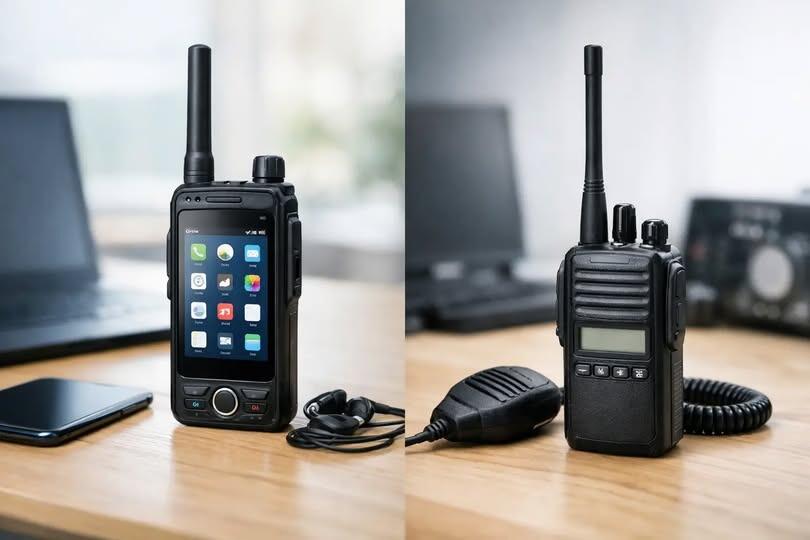
When a customer asks about network radio vs two way radio, the real question is usually simpler: what will still work properly when people are spread out, the job is moving quickly, and communication cannot be left to chance? That is where the difference matters. On paper, both systems let teams talk at the press of a button. In practice, they solve different problems and suit different operating conditions.
Network radio vs two way radio: the core difference
A traditional two way radio communicates over radio frequencies. Depending on the system, radios talk directly to each other or through a repeater that extends coverage. A network radio, sometimes called a PoC or push-to-talk over cellular radio, uses the mobile data network and often Wi-Fi rather than a conventional RF channel.
That single difference changes almost everything. Two way radio is built around local radio coverage, licensing, frequencies, handset power and infrastructure such as repeaters and antennas. Network radio is built around data connectivity, SIM provision, platform management and the availability of mobile coverage.
Neither is automatically better. The right choice depends on where you work, how wide the coverage needs to be, how much control you want over the system, and what happens if the network goes down.
Where two way radio still has the advantage
For many operational users, two way radio remains the most dependable option because it is self-contained. If your team is on one site, in one building, across a farm, around a warehouse or working vehicle-to-vehicle within a known area, a properly specified radio system gives direct, immediate communication without relying on a mobile network.
That matters in places where mobile signal is weak, inconsistent or overloaded. It also matters where users need predictable performance from equipment that is configured for a specific task. Licensed business radios, digital systems such as DMR, and repeater-based setups can all provide stable communication with very low delay.
There is also a control benefit. With a conventional two way radio system, the operator or site owner has much tighter oversight of channels, coverage design, accessories and installed infrastructure. If you need a fixed solution built around a depot, event site, works yard, estate or industrial premises, two way radio often makes more technical and financial sense over time.
Where network radio makes more sense
Network radio is attractive for one reason above all: coverage area. If your users are travelling across towns, counties or nationwide, a network radio can keep them in one talk group without the range limits of a standard RF system. For couriers, field engineers, private hire fleets, support staff and dispersed teams, that can be a practical answer to a real coverage problem.
There is less dependence on local radio infrastructure because the mobile network does the heavy lifting. You do not need to build repeater coverage over a wide geography. That can reduce complexity if the alternative would be multiple sites, linking equipment and ongoing radio system planning.
Network radios also tend to be straightforward to scale. Adding another handset to a platform is often easier than redesigning a conventional radio system. Features such as GPS tracking, dispatcher software, call recording and remote management can be easier to integrate as well, depending on the platform.
Coverage is not the same as reliability
This is where buyers need to be careful. Network radio can offer broader nominal coverage, but broader does not always mean more reliable. If a handset depends on 4G or 5G data and the signal drops inside a plant room, basement, rural route or steel-framed building, the user may lose communications altogether. A conventional two way radio may still work perfectly in the same location if the RF system has been designed for that environment.
The reverse is also true. A standard two way radio may perform very well on a site, but it will not magically cover staff who are then 40 miles away unless you have the right infrastructure in place. Network radio handles that type of spread far more easily.
So the sensible comparison is not just range. It is whether the communication path is dependable in your actual working environment.
Cost differences over time
The upfront cost comparison can be misleading. Two way radio systems may require licensed frequencies, programming, accessories, chargers and, in some cases, repeaters, antennas and installation work. That can make the initial spend higher, particularly for a fixed business system.
Network radio often looks simpler at the start. Handsets can be deployed quickly, and there may be little or no local infrastructure to install. However, there is usually an ongoing service cost for SIM connectivity, platform access or subscription management. Over a few years, those recurring charges need to be weighed against the one-off and maintenance costs of a radio system.
For a small fleet that operates nationally, the monthly model may still be the better fit. For a site-based team using radios every day in one operational area, conventional two way radio may prove more economical in the long run.
Audio, latency and user experience
Users often care less about the underlying technology and more about whether messages get through cleanly and quickly. Conventional two way radio generally offers instant push-to-talk response with very little delay. That is particularly useful when communication is fast-paced, short-form and operational, such as traffic control, security, site coordination or event management.
Network radio can deliver good audio and useful features, but there may be more latency because the call is travelling over a data network and server platform. In many environments that delay is minor. In others, especially where rapid back-and-forth matters, it can become noticeable.
The handset experience also differs. Some network radios are designed to feel very much like a conventional radio, which helps adoption. Others sit somewhere between a radio and a managed smart device. That may be an advantage if you want app-based features, but not every workforce wants extra complexity.
Licensing, compliance and setup
Two way radio usually requires more technical planning at the outset. You may need to choose between licence-free and licensed operation, analogue or digital formats, direct mode or repeater use, and suitable antennas and accessories. The benefit is that the resulting system can be tailored closely to the job.
Network radio avoids some of that RF planning, but it introduces other considerations. You still need to think about network resilience, tariff management, device provisioning, software platform support and coverage across the exact areas where staff work. If the devices are business-critical, support arrangements matter just as much as the handsets themselves.
This is one reason specialist advice helps. A radio is never just a radio once it becomes part of an operational workflow.
Which system suits which user?
A warehouse, factory, school, event team or local security operation will often be better served by two way radio, especially where users stay within a known area and need immediate, dependable communication without relying on public mobile networks.
A fleet operator, regional service business or mobile workforce spread across a large geography may benefit more from network radio, particularly where users need to stay in contact beyond the footprint of a local radio system.
There is also a middle ground. Some organisations use both. They keep conventional two way radio for on-site staff and use network radios for supervisors, drivers or remote personnel. That hybrid approach can be sensible when communication needs change by role rather than by company.
The practical question to ask first
Instead of starting with features, start with failure points. Where do your people work? What happens if they lose signal? Do they need building penetration, nationwide talk groups, fixed-site repeatability or simple radio-to-radio operation? How many users are involved, and who will support the system after purchase?
Those questions usually make the decision clearer. The best system is the one that fits the environment, the users and the consequences of downtime. That is why advice, setup support and after-sales service are not extras. They are part of getting the specification right in the first place.
At Radioworld UK, that is often the point where the conversation becomes more useful than the product category. If you match the radio system to the job rather than chasing a headline feature, you end up with equipment that works properly on day one and keeps working when it matters.
Go Back