
Pop Culture Meets the Airwaves: How Stranger Things Helped Spark New Interest in Amateur Radio
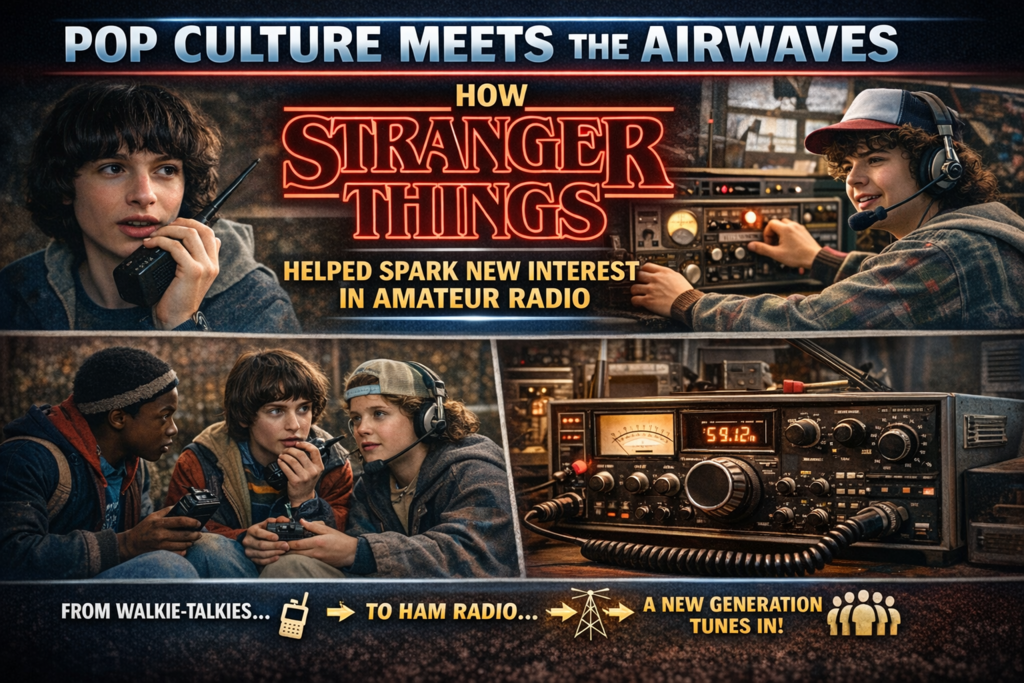
When Stranger Things first appeared on Netflix, it quickly became a global cultural phenomenon. Beyond its supernatural storyline and 1980s nostalgia, the show has had an unexpected real-world impact: reigniting interest in radio communication among younger generations. Across its seasons, Stranger Things consistently presents radios as vital tools rather than background props. When modern infrastructure fails, the characters rely on walkie-talkies, antennas, and improvised long-range communication to stay connected. For viewers raised in a world dominated by smartphones and social media, this portrayal reframes radio as something powerful, independent, and resilient. Industry observers and specialist retailers have noted a clear “gateway effect.” Curiosity sparked by the show often begins with basic radios or walkie-talkies, before progressing into deeper exploration of communication technology — including CB and amateur (ham) radio. What starts as pop-culture fascination frequently develops into genuine technical interest. The appeal lies partly in authenticity. Amateur radio offers hands-on learning, experimentation, and a direct connection to the physics of communication — qualities echoed by the DIY, problem-solving ethos celebrated in the series. For STEM-minded young people in particular, radio provides a tangible alternative to app-based technology, where understanding replaces abstraction. Community also plays a significant role. Stranger Things emphasises teamwork and connection, with radio acting as the link between friends and allies. That same sense of community is central to amateur radio, through clubs, on-air nets, and mentoring between experienced operators and newcomers. While Stranger Things was never intended as a promotional vehicle for amateur radio, its influence is undeniable. By presenting radio communication as essential, exciting, and human, the show has helped remove outdated stereotypes and reintroduce radio as a relevant modern skill. As younger audiences continue to look for meaningful, practical hobbies beyond screens and algorithms, amateur radio stands out as a discipline that combines technology, learning, and community — proving that sometimes, the most inspiring innovations are the ones that have been with us all along.
